
Your software is a competitive decision
- Hoshang Bhesania
- November 3, 2026
- 12:30 pm
Customer expectations around turnaround times have tightened, and fabricators are under pressure to do more with leaner teams. In practice, that means fewer people handling more quotes, more complex specifications and more dealer enquiries. The person who used to spend a day preparing a large quote now has half a day.
The estimator who could afford to drive back to the office to configure a non-standard window is now expected to have the answer on site. Admin that used to be acceptable, like re-keying data or manually converting documents between stages, starts to cost real time when the team is already stretched.
That puts more weight on the fenestration software they run on every day. If a salesperson cannot quote on site, or a dealer cannot operate without calling the office, or a confirmed order needs manual steps before it reaches the factory floor, those are problems the software should be solving.
Windowmaker sits at the centre of that workflow for thousands of fabricators and dealers across 75+ countries. We have been around long enough to know what our customers depend on, and we know they expect us to keep up with how the industry is changing.
Over the past two quarters we have made a series of improvements to refine how people quote, configure and push work to production. Here is what has changed.
Quoting non-standard products on site
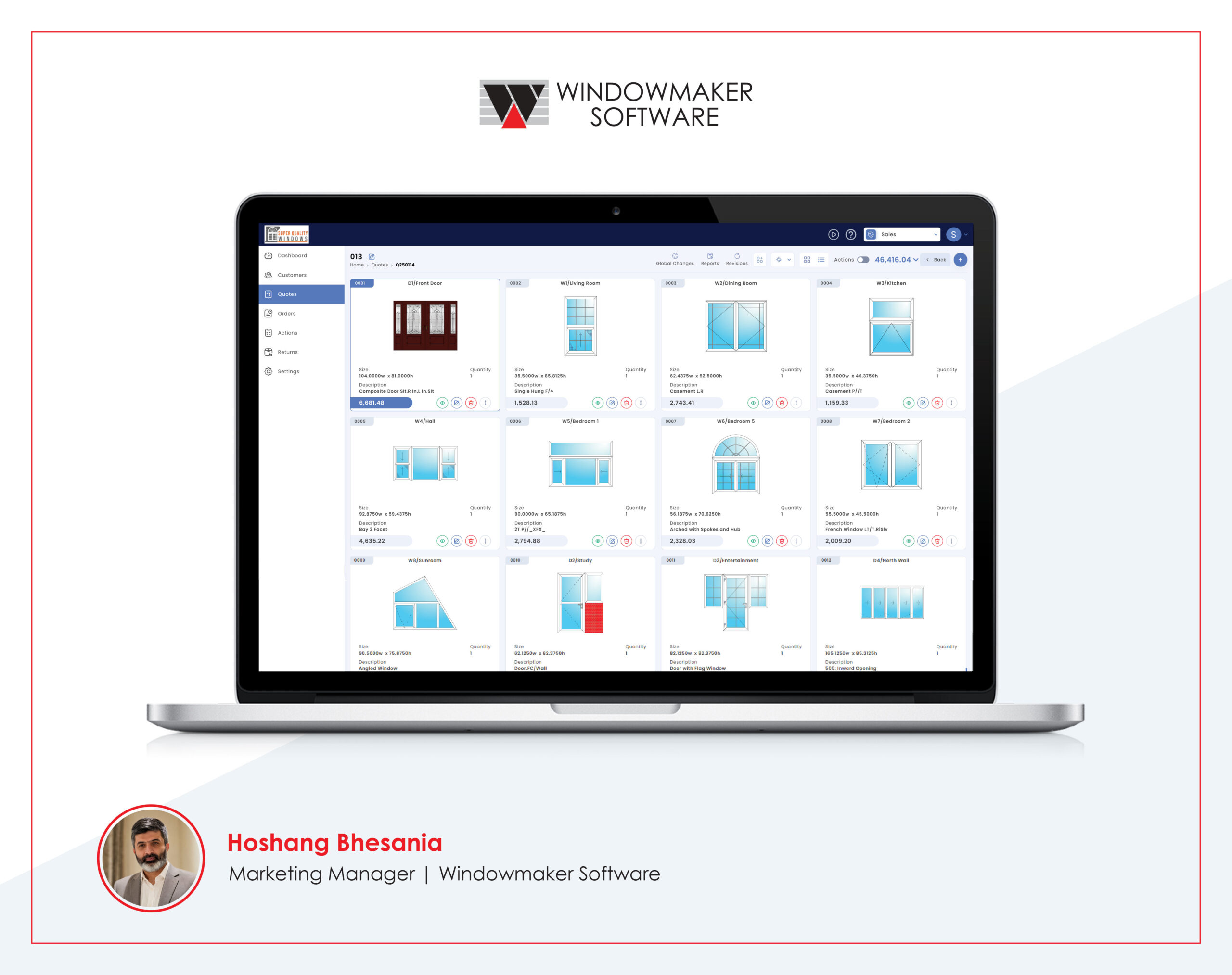
A salesperson visits a site, discusses a shaped window with a homeowner or architect, and then drives back to the office because the software needed to configure and price it sits on a desktop. By the time the quote goes out, the conversation has gone cold. Custom shapes, arched heads and flag configurations have been in Windowmaker for a long time, but until recently that work could only happen on the desktop application. Our browser-based tools now handle bespoke designs of the same complexity. Someone on site can configure, price and progress a job during the same meeting where the client asks for it. The design carries across platforms, so anyone picking it up later starts where it was left off.
For fabricators doing a lot of residential work, this is exactly the kind of improvement fenestration software should be delivering.
Less admin on every quote
Anyone who has quoted a 40-unit apartment block knows the friction of adjusting pricing line by line, scrolling through long option lists, or converting a quote to an order just to test a machinery link. Pricing adjustments can now be applied globally across a quote. Options are searchable. Glass selection filters by supplier. Sales orders can be created directly without converting from a quote first, which is useful for trade work. User defaults carry over from existing setups.
A fabricator processing hundreds of quotes a month will feel the difference.
Giving dealers independence without giving up control
Fabricators who sell through dealer networks know the tension. Dealers want to move quickly and serve their own customers. Fabricators want consistency and oversight. We have been improving how Windowmaker handles this.
Dealers can now manage their own end customers and quote independently, with product defaults inherited from the fabricator’s account. When those defaults change, every dealer picks up the update automatically. On the fabricator side, user permissions cover specific departments, fields, discount limits and approval workflows per person. Custom data fields (architect details, regional codes, freight information) are editable across the system and carry over on upgrade.
The aim is straightforward: dealers run their business, fabricators keep their standards.
Shorter path to the factory floor
An order sitting on someone’s desk waiting to be scheduled, optimised and sent to production is dead time. For many fabricators, the full scheduling workflow is more process than they need for a straightforward job. One action now optimises cutting, generates machine links, updates stock and packages all output for download. When something goes wrong, the system surfaces the detail clearly rather than returning a generic error.
We have also improved how multi-frame products are configured. Different profile choices and opening types can coexist within the same order line, which better reflects how real projects come together. A single line might combine a casement door with sliding windows, each with its own specifications.
Where we go from here
We keep coming back to the same thing: does this make it easier for our customers to go from a conversation to a confirmed, production-ready order? We are not done, but the feedback from customers tells us these changes are landing well.
If any of this is relevant to your operation, or if you are exploring fenestration software options, we would welcome a conversation. Get in touch at windowmaker.com/contact-us.